The Backfire Awards, for outstanding achievement in unintended consequences. The Midgley goes to backfires at world scale, the Murphy to everyday ones. Vote on whether each one deserves it. About the awards
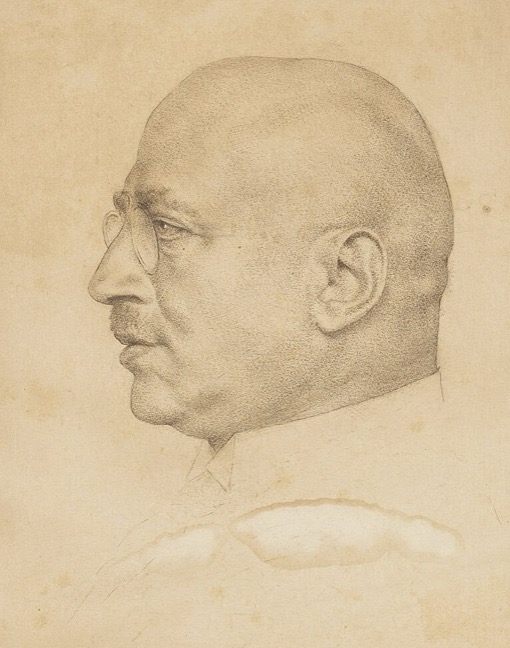
In 1909 a chemist pulled nitrogen out of the sky and turned it into fertilizer. It worked. Then it kept working.
Swipe →
How to read the tile
41868HaHaber▲1B▼100M
4Group
Ecology and Agriculture. The color matches.
1868Born
Haber was born in 1868.
HaSymbol
The first two letters of the name.
HaberName
The surname, or the short name of a program.
▲1BHelped
People it helped: a billion or more.
▼100MHarmed
People it harmed: 100 million or more.
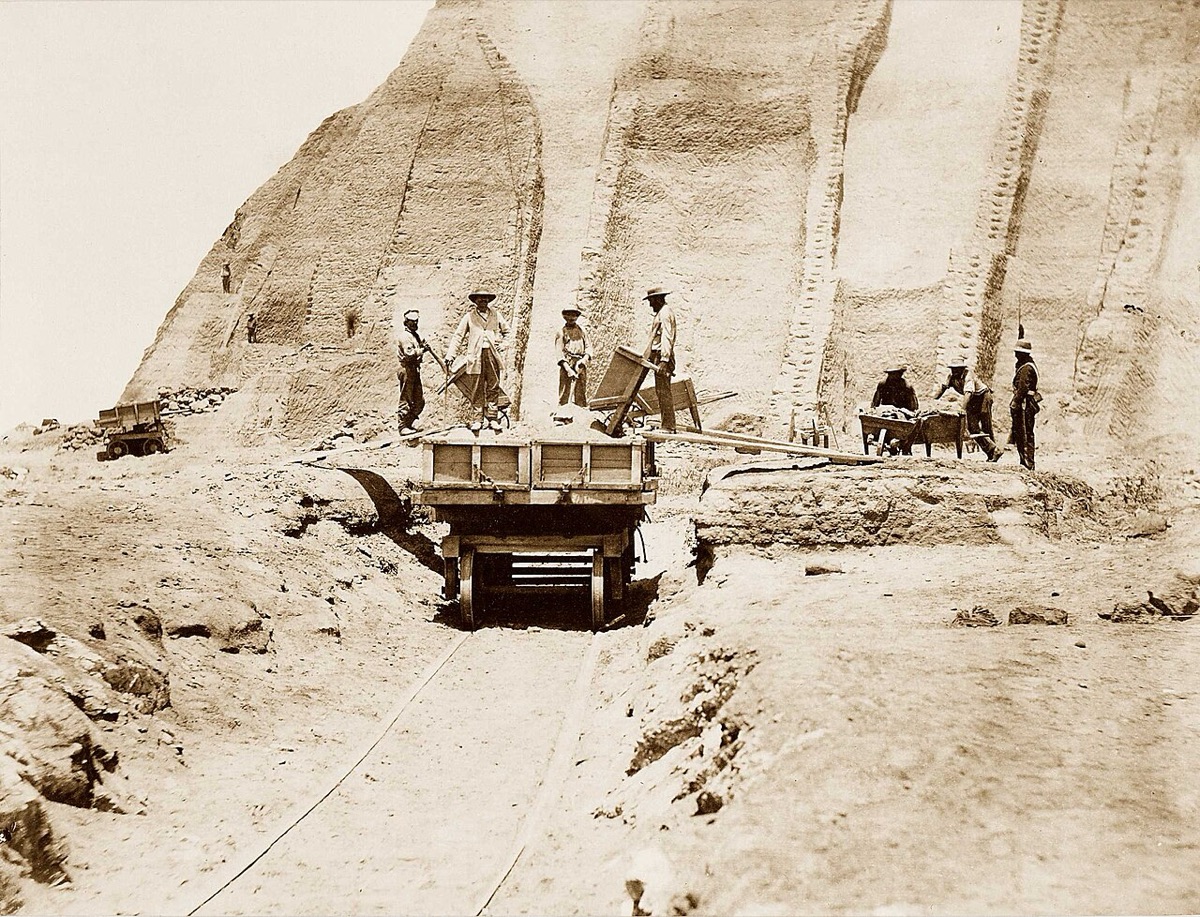
Guano mining, Chincha Islands, Peru, 1865. Henry de Witt Moulton. Public domain.
01 What it was meant to do
Fix a coming food shortage
Crops need nitrogen. Around 1900 most fertilizer nitrogen came from bird droppings dug off islands near Peru and from saltpeter mined in Chile. Both were running out. In 1898 the chemist William Crookes warned that the world would soon not grow enough wheat.
Wheat harvest on the Palouse. USDA. Public domain.
02 What went right
Half the world eats because of it
Fritz Haber found a way to make ammonia from the nitrogen in air. Carl Bosch scaled it up, and the first plant opened in 1913. Roughly half the people alive today eat food grown with it.
Sediment and phytoplankton in the Gulf of Mexico, 2023. NASA. Public domain.
03 What went oops
The extra nitrogen goes somewhere
Crops use only part of the fertilizer. The rest runs into rivers and the sea, feeds algae, and uses up the oxygen. Each summer the Gulf of Mexico grows a dead zone thousands of square miles wide.
Nitrous oxide, a greenhouse gas 270 times stronger than CO2
Explosives for World War I
04 What they got right
The chemistry still holds
More than a century later the world still makes ammonia the way Haber and Bosch did. The fixes being tried now leave the process alone and use less of it: fertilizer applied at the right time, in the right amount, in the right place.
05 Could anyone have seen it coming?
Partly
KnowablePartlyUnforeseeable
The use in explosives was obvious by 1914. The damage to rivers, coasts and the climate was understood much later, once fertilizer use had grown many times over.
Pattern #1
Solve a shortage, create a surplus
→ #1Solve a shortage, create a surplus Too little becomes too much, and the extra goes somewhere.
#2Too stable to go away Built to last, so it lasts where it shouldn't.
#3The problem moves Fixed in one place, it lands in another.
#4Great for one, bad for all Each user wins. When everyone uses it, everyone loses.
#5Chasing the wrong number It hit its target. The target was the wrong one.
#6The cure breeds resistance Kill most of the problem and the survivors take over.
#7The reward gets gamed People chase the incentive instead of the goal.
#8Cheap now, paid later The bill arrives decades after the benefit.
#9The lesson flipped Built to teach one lesson, it taught the opposite.
The verdict so far
Oops Score?Judges still scoring
Herd Score?Not enough votes yet
Is Fritz Haber Midgley-worthy?
Vote and argue at backfireawards.com/n/haber
Follow the Backfire Awards for a new backfire every week.
Algorithmic social media Misinformation, polarization, privacy loss, addictive engagement and algorithmic amplification. Causality is heavily researched but still debated.
What went right
Connected people at global scale and made publishing essentially frictionless.
What went oops
Misinformation, polarization, privacy loss, addictive engagement and algorithmic amplification. Causality is heavily researched but still debated.
Edward M. Bassett 1863 to 1948 Cities and Transport
Single-use zoning
Factories, tenements and towers were crowding together, cutting off light and air and putting noxious industry next to homes.
Swipe →
How to read the tile
2?BaBassett▲?▼?
2Group
Cities and Transport. The color matches.
?Born
Year born, or founded.
BaSymbol
The first two letters of the name.
BassettName
The surname, or the short name of a program.
▲?Helped
People it helped: not yet researched.
▼?Harmed
People it harmed: not yet researched.
01
What went right
Factories, tenements and towers were crowding together, cutting off light and air and putting noxious industry next to homes. Bassett led the drafting of America's first comprehensive zoning code. Separating uses protected public health and property values so well that cities across the country copied it.
02
What went oops
Once separating uses became the default everywhere, homes, jobs and shops ended up miles apart. The result was car dependence, sprawl, exclusionary single-family districts and a housing shortage that is now hard to legislate away. Mixed-use neighborhoods became illegal to build.
03 Could anyone have seen it coming?
Partly knowable
KnowablePartlyUnforeseeable
The verdict so far
Oops Score?Judges still scoring
Herd Score?Not enough votes yet
Is Edward M. Bassett Midgley-worthy?
Vote and argue at backfireawards.com/n/edward-m-bassett
Follow the Backfire Awards for a new backfire every week.
Single-use zoning (New York's 1916 Zoning Resolution) Once separating uses became the default everywhere, homes, jobs and shops ended up miles apart. The result was car dependence, sprawl, exclusionary single-family districts and a housing shortage that is now hard to legislate away. Mixed-use neighborhoods became illegal to build.
What went right
Factories, tenements and towers were crowding together, cutting off light and air and putting noxious industry next to homes. Bassett led the drafting of America's first comprehensive zoning code. Separating uses protected public health and property values so well that cities across the country copied it.
What went oops
Once separating uses became the default everywhere, homes, jobs and shops ended up miles apart. The result was car dependence, sprawl, exclusionary single-family districts and a housing shortage that is now hard to legislate away. Mixed-use neighborhoods became illegal to build.
Teach people the economist Henry George's argument: when a few own the land and collect the rent, they get rich and everyone else gets poorer.
02 What went right
It worked as a game.
She patented it in 1904, and people copied it by hand for decades, playing it in colleges and in homes from Atlantic City to Pennsylvania.
03
What went oops
In 1935 Parker Brothers sold a version as Monopoly, where you win by bankrupting everyone else. It became one of the best-selling board games of all time, and it taught the opposite lesson.
04
What they got right
Her board, with properties around the edge and a jail in the corner, is still the one people play.
05 Could anyone have seen it coming?
Unforeseeable at the time
KnowablePartlyUnforeseeable
She could not have seen a game built to criticize monopoly becoming the way millions learn to enjoy one.
Pattern #9
The lesson flipped
#1Solve a shortage, create a surplus Too little becomes too much, and the extra goes somewhere.
#2Too stable to go away Built to last, so it lasts where it shouldn't.
#3The problem moves Fixed in one place, it lands in another.
#4Great for one, bad for all Each user wins. When everyone uses it, everyone loses.
#5Chasing the wrong number It hit its target. The target was the wrong one.
#6The cure breeds resistance Kill most of the problem and the survivors take over.
#7The reward gets gamed People chase the incentive instead of the goal.
#8Cheap now, paid later The bill arrives decades after the benefit.
→ #9The lesson flipped Built to teach one lesson, it taught the opposite.
The verdict so far
Oops Score?Judges still scoring
Herd Score?Not enough votes yet
Is Lizzie Magie Midgley-worthy?
Vote and argue at backfireawards.com/n/magie
Follow the Backfire Awards for a new backfire every week.
The Landlord's Game (which became Monopoly) In 1935 Parker Brothers sold a version as Monopoly, where you win by bankrupting everyone else. It became one of the best-selling board games of all time, and it taught the opposite lesson.
What it was meant to do
Teach people the economist Henry George's argument: when a few own the land and collect the rent, they get rich and everyone else gets poorer.
What went right
It worked as a game. She patented it in 1904, and people copied it by hand for decades, playing it in colleges and in homes from Atlantic City to Pennsylvania.
What went oops
In 1935 Parker Brothers sold a version as Monopoly, where you win by bankrupting everyone else. It became one of the best-selling board games of all time, and it taught the opposite lesson.
What they got right
Her board, with properties around the edge and a jail in the corner, is still the one people play.
Could anyone have seen it coming?
Unforeseeable at the time
She could not have seen a game built to criticize monopoly becoming the way millions learn to enjoy one.